Concrete Repair Near You in San Marcos, TX
Concrete repair is part diagnosis and part handwork. The patch is easy. Knowing whether a crack is cosmetic, whether a step will keep sinking, and whether the honest answer is "replace it" is the part you're paying for. So start with the diagnosis.
Concrete Crack Repair: Read the Crack Before Fixing It
Open the one that looks like yours. The colored edge tells you how urgent it is.
Fine web of cracks on the surface Cosmetic
- Means
- The surface dried too fast during finishing (crazing or plastic shrinkage).
- Fix
- Leave it, or a sealer or resurfacer if it bothers you.
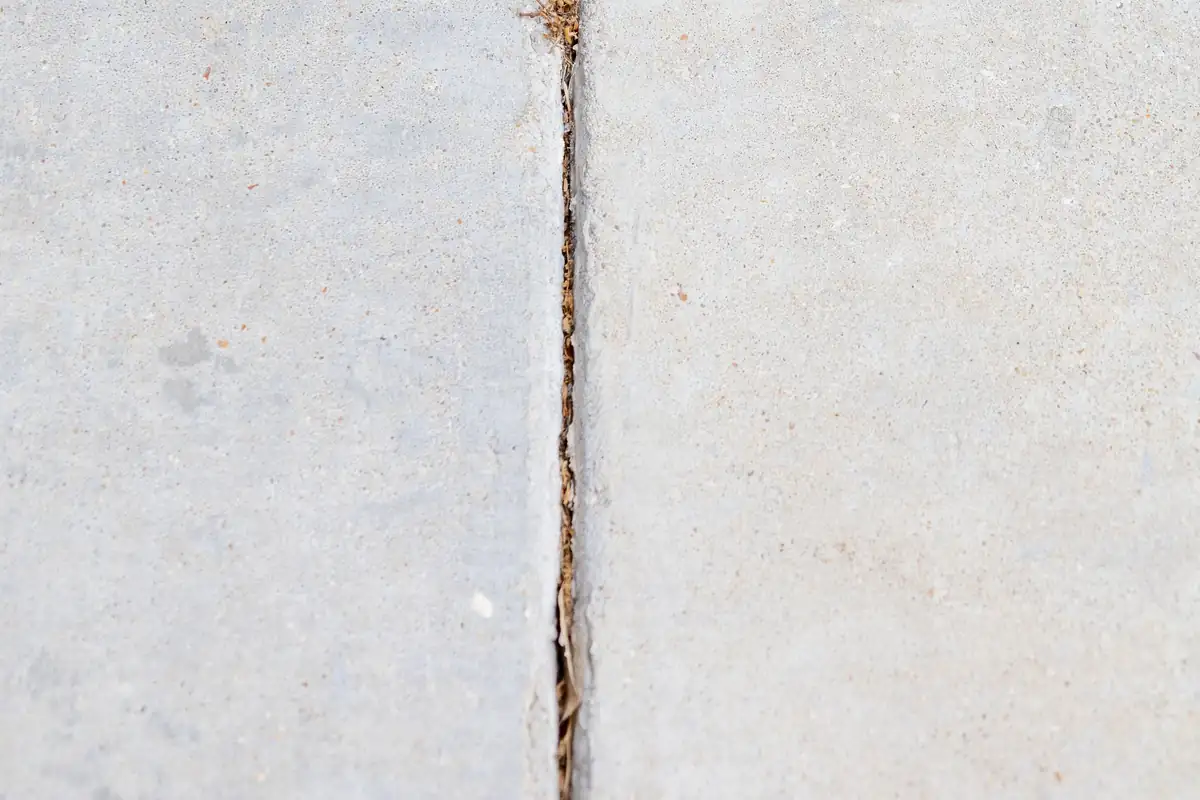
One straight crack across a panel, edges level Seal it
- Means
- Normal shrinkage where a joint should have been.
- Fix
- Rout and seal with flexible sealant to keep water out of the clay below.
One side of the crack higher than the other Find the cause
- Means
- Ground movement: clay swelling or settling, or a root.
- Fix
- Find the water or root first; then lift, grind or replace the panel. It's also a trip hazard now.
Crack gets wider every summer Fix drainage
- Means
- Clay shrinking as it dries; often a drainage or tree issue.
- Fix
- Fix the drainage. Sealant alone won't hold a crack that moves this much.
Flaking, pitted or peeling top surface Resurface
- Means
- Spalling or scaling: weak surface paste, often from water added during finishing.
- Fix
- Surface repair or resurfacing, if the slab under it is sound.
Cracks in the house foundation or the brick above it Engineer first
- Means
- Possible foundation movement.
- Fix
- A structural engineer's evaluation before any concrete patch.
The "find the cause" and "fix drainage" rows are the San Marcos story. On the Blackland side, Houston Black clay opens cracks up to 4 inches wide in dry months and swells shut when it rains (USDA official series description). Slabs on top go along for the ride, and the cracked concrete is the symptom.
Concrete Step Repair for Entry Stairs and Porches
Tap a tread with a hammer: a sharp ring means sound concrete, a dull thud means it's hollow underneath.
Concrete steps fail in a few predictable ways:
- Chipped nosings (the front edge of each tread). Repairable with a bonded patch if the rest of the step is solid.
- Steps pulling away from the house or porch. Usually the step block is settling on its own. If the gap is stable it can be sealed; if it keeps growing, the step needs to be rebuilt on a proper footing.
- A tilted or sunken bottom step. Often caused by water off the roof. Rebuild the step and fix the downspout.
- Spalled or crumbling treads. Resurfacing works only if the concrete below is sound; tapping with a hammer tells you fast.
Concrete porch repair follows the same logic: patch the surface if the slab is solid, rebuild if it's hollow underneath.
Concrete Slab Repair: Cut Out, Pour Back, Fix the Cause
Garage concrete repair is usually cracks, oil-soaked spots and a sunken section at the door where rain runs in. Cracks get routed and filled; the door section can be cut out and replaced with dowels into the slab behind it.
Patio and walkway slabs: a single bad section is cut out along joints and poured back, with the cause underneath (a downspout, a sprinkler, a root) dealt with first. Where a whole patio is gone, see concrete patio replacement; for walks, concrete sidewalk repair has the details.
Concrete wall and curb repair: broken curb edges and chipped retaining wall caps can be formed and patched. Walls that lean are a structural problem, not a patch.
Driveways have their own page, because the repair-or-replace call there depends on city approach rules: see concrete driveway repair and replacement.
Cement Repair Products vs. a Concrete Repair Company
We'll say it plainly: some concrete repair is a homeowner job. A tube of polyurethane crack sealant or a Quikrete crack seal product is fine for a narrow crack that isn't moving and has no height difference across it. Clean it, dry it, fill it, done.
| The damage | Store-bought patch or sealant | Hire it out |
|---|---|---|
| Narrow crack, not moving, edges level | Yes: clean, dry, fill | Not worth our minimum |
| Crack that moves with the clay | Rigid patch pops out | Flexible sealant plus the water fix |
| Height difference at a crack | Feathered patch breaks at the thin end | Grind, lift or replace |
| Chipped step nosing or edge | Rarely holds without forms and bonding agent | Formed, bonded patch |
| Whole patio surface worn | Hard to get even by hand | Resurfacing |
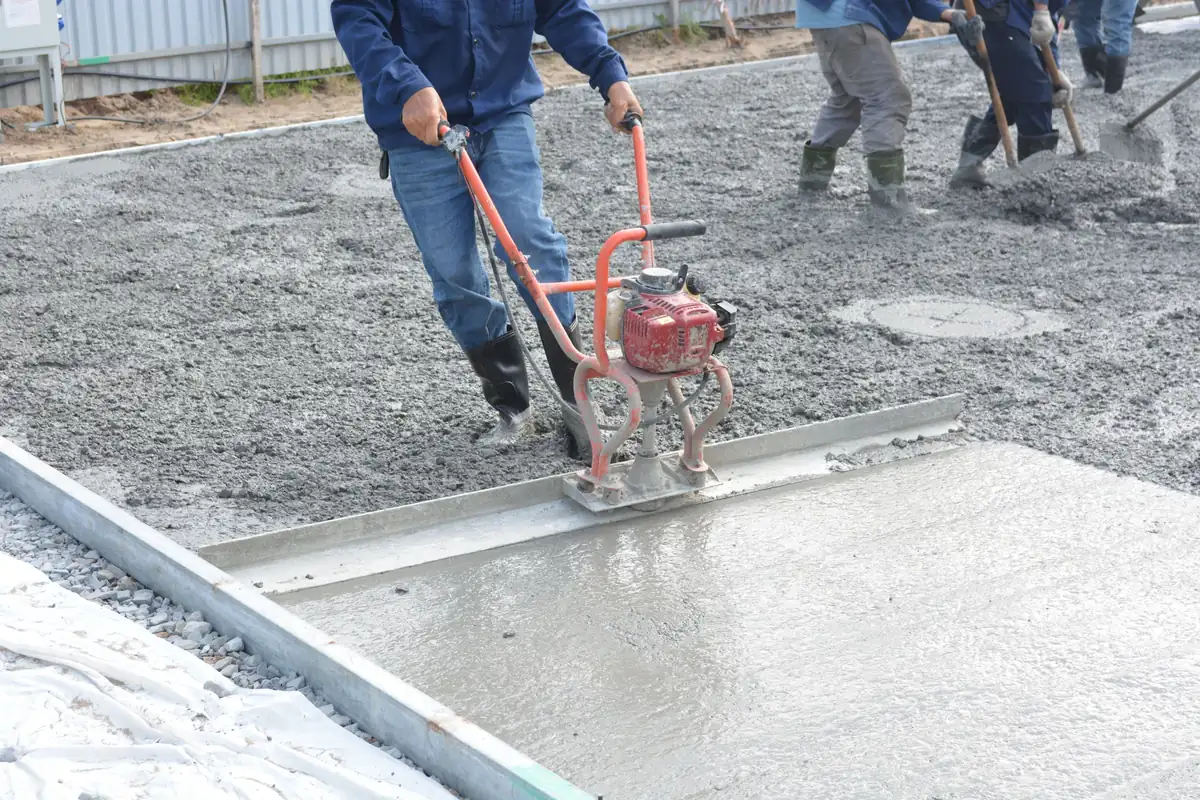
That's where hiring a concrete repair company is worth it: forming, cutting out to sound concrete, bonding, doweling, and curing it right.
Structural Concrete Repair: When It's More Than a Patch
Some concrete problems are signs of something bigger. Cracks running through brick above the slab, doors that stick, a garage slab separating from the stem wall, or a retaining wall that leans all deserve an engineer's look before a contractor's price. An engineer's report costs less than the wrong repair and gives every bidder the same plan to price.
On the aquifer recharge zone, any repair that involves new excavation follows the city's rules for digging there: a sensitive feature found during work means stopping within 50 feet until it's evaluated (Development Code §6.3.2).
Concrete Repair Cost for Cracks, Steps and Lifting
| Repair | Published range | Source |
|---|---|---|
| Crack filling | $0.50–$3 per linear ft; minimum often $100–$150 | HomeAdvisor, June 2026 |
| Concrete step repair | $250–$750 | HomeAdvisor, June 2026 |
| Slab lifting by mudjacking | $3–$6 per sq ft | HomeAdvisor, June 2026 |
| Slab lifting with foam | $5–$25 per sq ft | HomeAdvisor, June 2026 |
The minimum charge is the number that surprises people. Three cracks and one chipped step cost close to what one of them does, so it pays to list everything at once.
Links: HomeAdvisor crack repair, HomeAdvisor steps, HomeAdvisor leveling.
New concrete instead? Start at the concrete contractor home page.
Concrete Repair Questions
Is it worth repairing small cracks?
Hairline shrinkage cracks that aren't moving are cosmetic; many are best left alone. Sealing is worth it when a crack is wide enough to let water and dirt in, because water under a slab on clay is what turns a small crack into a dropped panel.
Do you take small concrete repair jobs?
Yes: a broken step, a few cracks, one bad panel. Small jobs carry a minimum charge because the crew's trip costs the same whatever the size. If photos show it's a DIY job, we'll say so.
Will a repaired section match the rest?
New concrete is lighter than old and weathers toward it over time. On steps and porches a full new tread or a resurfacing coat gives a more even look than spot patches.
Can concrete be repaired in winter?
Most San Marcos winters allow it; January lows average 38.9°F in NOAA's 1991–2020 normals. Patch materials and new concrete need protection from a hard freeze while they cure, so repairs wait out cold snaps like February 2021's.
Describe the damage
What's cracked or broken, where, and how long it's been getting worse. We'll ask for photos in our reply.